The Vardaris, the north wind down the Axios valley, can make a clear day feel several degrees colder than the thermometer says.
Season
What the days are like
What to pack
Spring (Mar to May)
March is changeable; April and May settle into clear, comfortable days and soft light
Layers, a light jacket, a small umbrella for early spring
Summer (Jun to Aug)
Highs commonly 30 to 34°C, warm humid nights, very little rain
Light breathable clothing, hat, sunglasses, sunscreen, water
Autumn (Sep to Nov)
September stays summery; October is mild with thin crowds; November turns wet and blustery
Layers, comfortable shoes for the cobbles, a compact umbrella
Winter (Dec to Feb)
Roughly 2 to 12°C by day, the wettest and greyest stretch; settling snow is rare in the centre
Warm coat, scarf, water-resistant shoes, a wind-resistant layer
What is the weather like in Thessaloniki?
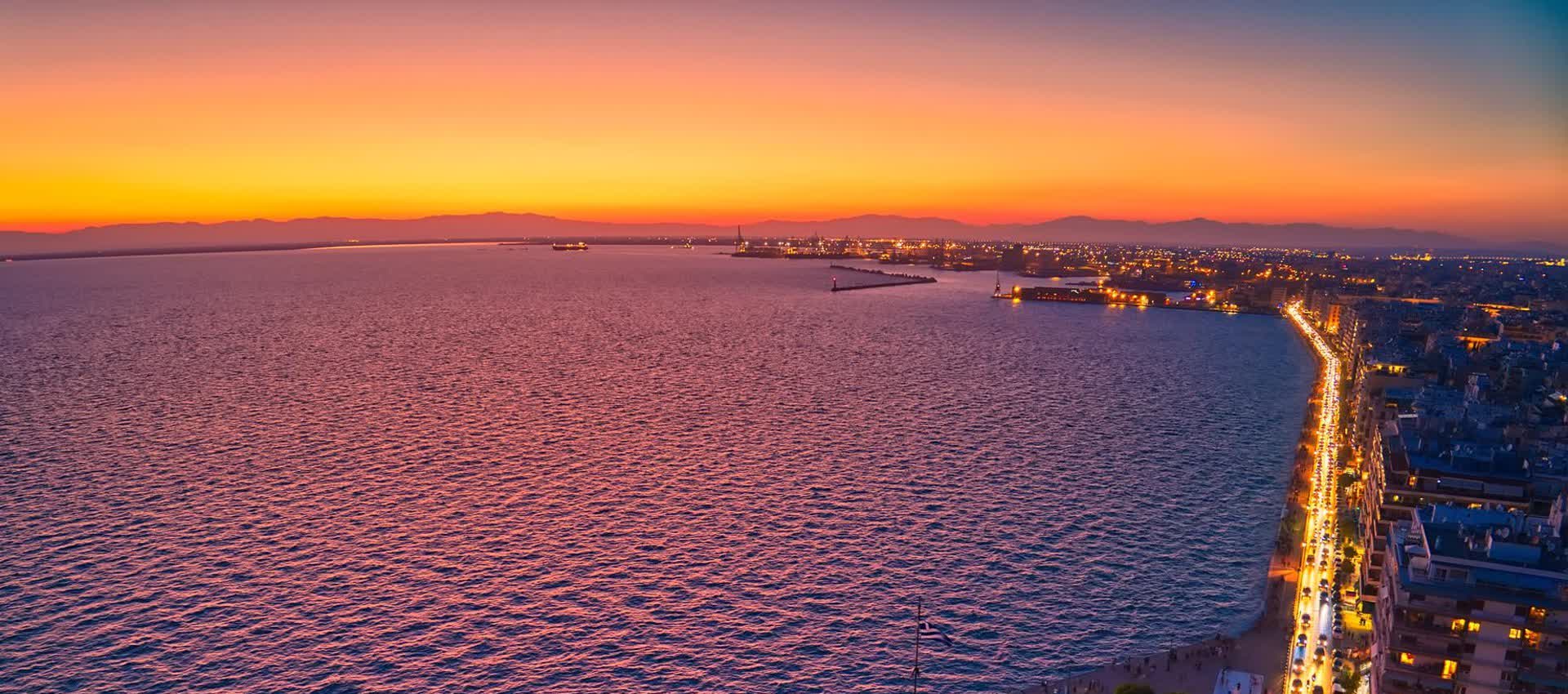
Thessaloniki sits on the Thermaic Gulf and has a Mediterranean climate edged with continental influence. Hot, dry summers and mild, damp winters. Most rain falls between late autumn and early spring. Summer is reliably sunny. The defining local detail is the Vardaris, a north wind funnelling down the Axios valley that drops the temperature, clears the haze, and sharpens the light over the sea. Spring and autumn are the comfortable shoulders, summer is for the waterfront and late evenings, and winter is brisk but rarely harsh. Whenever you come, the compact, flat centre keeps the city walkable in almost any conditions.
Summer (June to August)
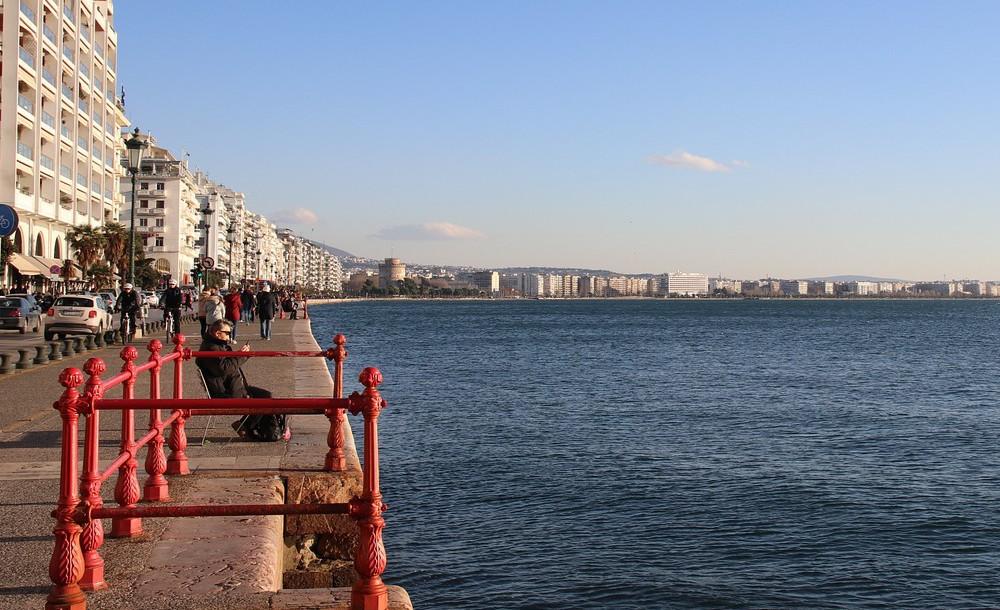
Peak season is hot and bright. July and August highs commonly sit around 30 to 34°C, occasionally higher in a heatwave, with warm, humid nights and very little rain. The sea breeze takes the edge off along the front, so plan the waterfront promenade and the open Roman sites for the cooler morning or the long golden evening, and keep the midday hours for the markets, museums, or a shaded café. Pack light, breathable clothing, a hat, sunglasses, and sunscreen, and carry water. After a day in the heat, an air-conditioned suite to come back to changes the trip, and every Loena suite has A/C.
Autumn (September to November)
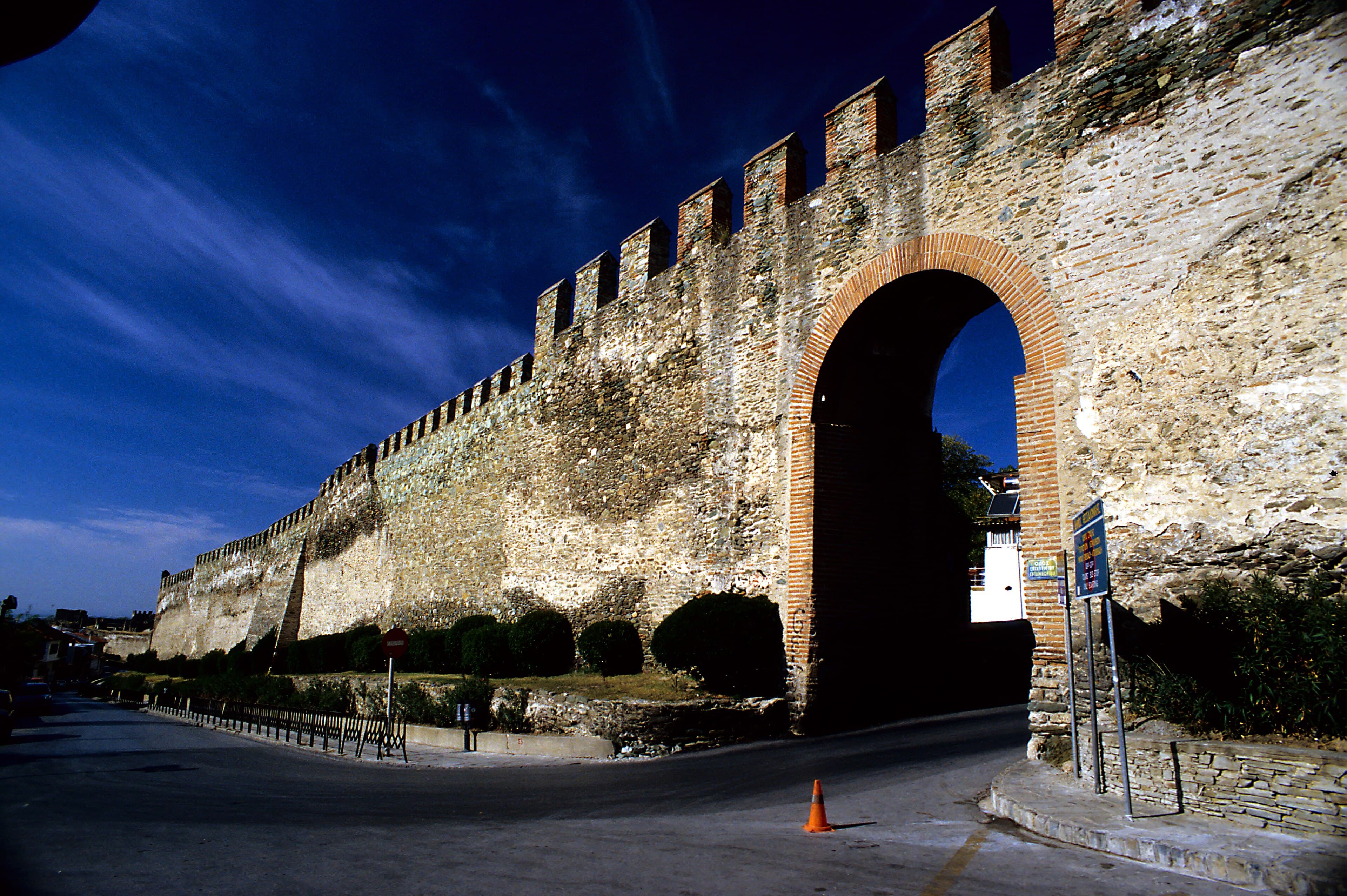
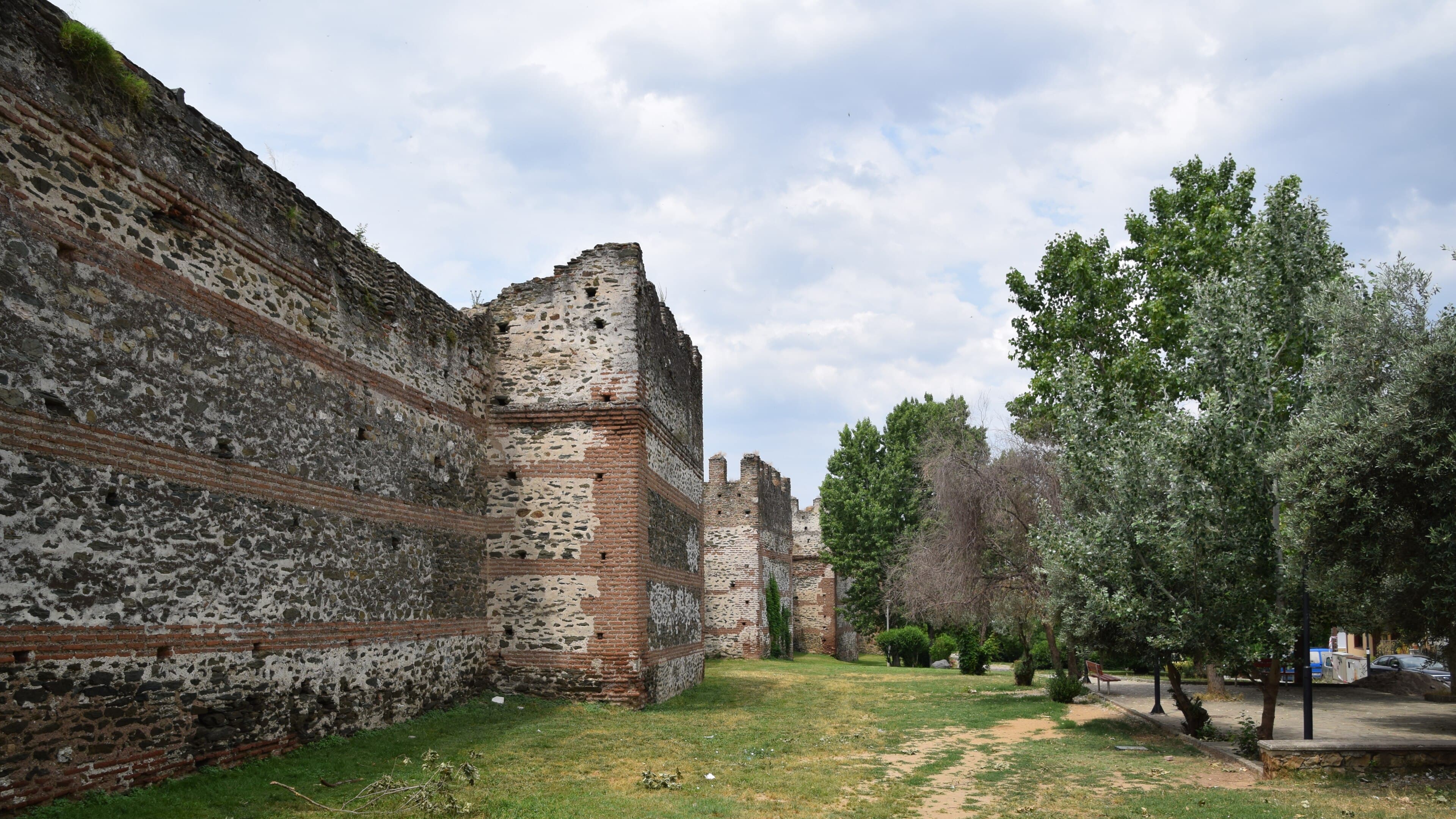
Early autumn is, for many, the best time to visit. September stays warm and summery, with the sea still swimmable, while October brings mild days, fresh evenings, golden light, and noticeably thinner crowds, ideal for walking Ano Poli and the Byzantine walls. From late October the first proper rains arrive, and November turns cooler and wetter, with grey, blustery spells when the Vardaris picks up. Bring layers you can add and shed through the day, comfortable shoes for the cobbles, and a compact umbrella or light rain jacket for the second half of the season, when indoor museums make easy wet-weather plans.
Winter (December to February)
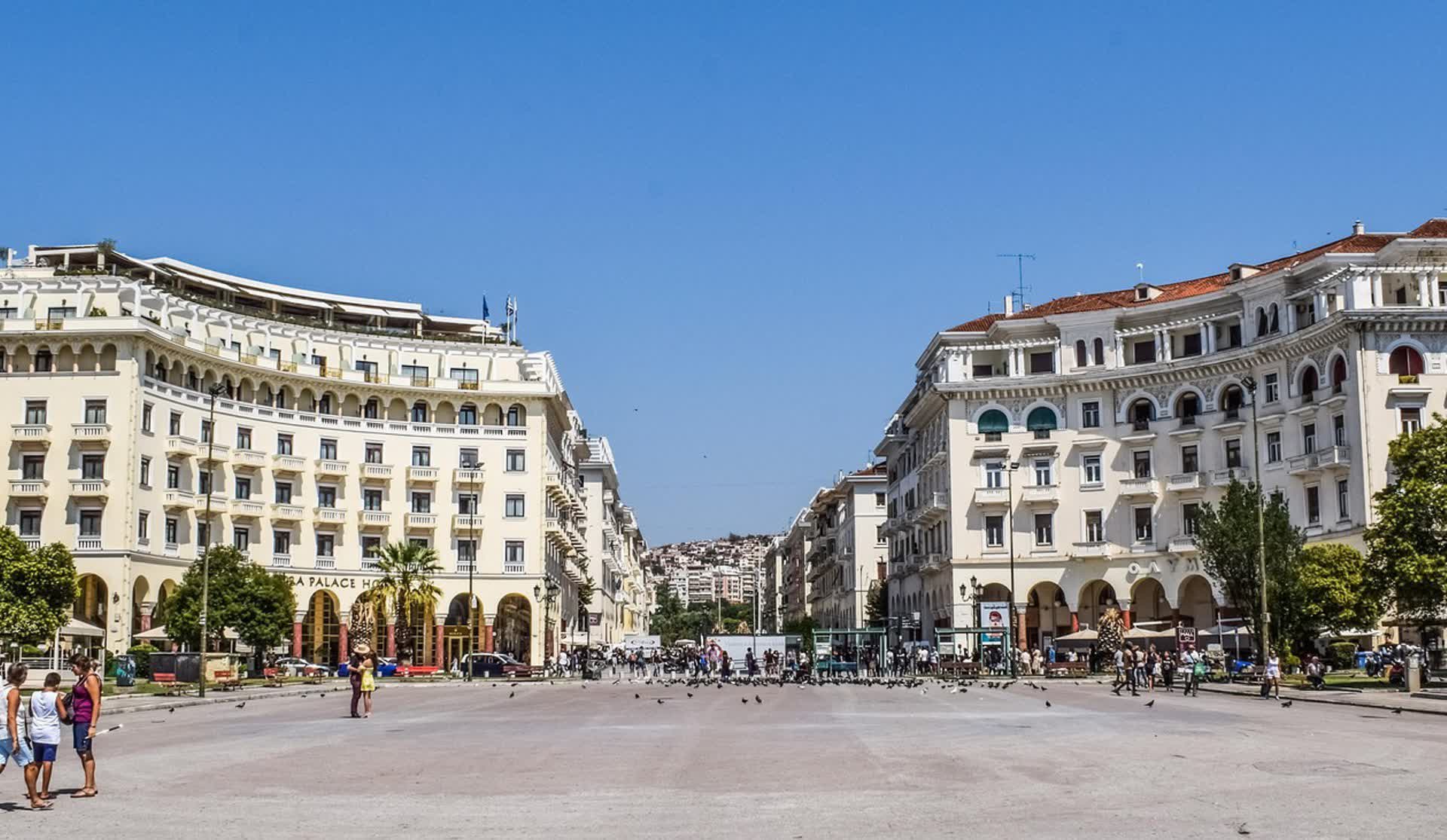
Winter is mild by northern European standards, with typical daytime temperatures roughly between 2 and 12°C and colder nights. It is the wettest, greyest stretch of the year, and the Vardaris can make clear days feel several degrees colder than the thermometer suggests, so a wind-resistant layer matters more than heavy padding. Snow does fall on the surrounding hills, but settling snow in the flat centre is rare and short-lived. Pack a warm coat, a scarf, and closed, water-resistant shoes. In exchange you get quiet monuments, easy restaurant tables, the festive lights along Aristotelous, and a warm kitchen back at the suite, with a shared washing machine on the floor.
Spring (March to May)
Spring warms steadily and is one of the loveliest windows for a city break. March is changeable, still carrying winter's chill and showers, but April and May settle into clear, comfortable days made for the waterfront, Ano Poli, and the open archaeological sites, with the city greening and the cafés spilling onto the squares. Crowds and prices are gentler than in high summer, and the light turns soft. Days are warm, evenings still cool, and the odd shower passes quickly. Pack layers and a light jacket for the evenings, with a small umbrella for early spring, and that is all you need.
When is the best time to visit?
For the kindest balance of weather, light, and crowds, aim for late April to mid-June or September to mid-October, when days are warm and mostly dry, evenings are comfortable, and the whole compact centre is easy on foot. Come in summer for hot beach-and-waterfront energy and the liveliest nights, accepting the heat and humidity. Winter brings the lowest prices, the quietest monuments, and the festive season, with rain and the wind to accept alongside. Greek public holidays and the September trade fair and film festival can fill the city, so book ahead around those dates. Whatever the forecast, Thessaloniki's flat core rewards walkers year-round.
Staying central, in any season
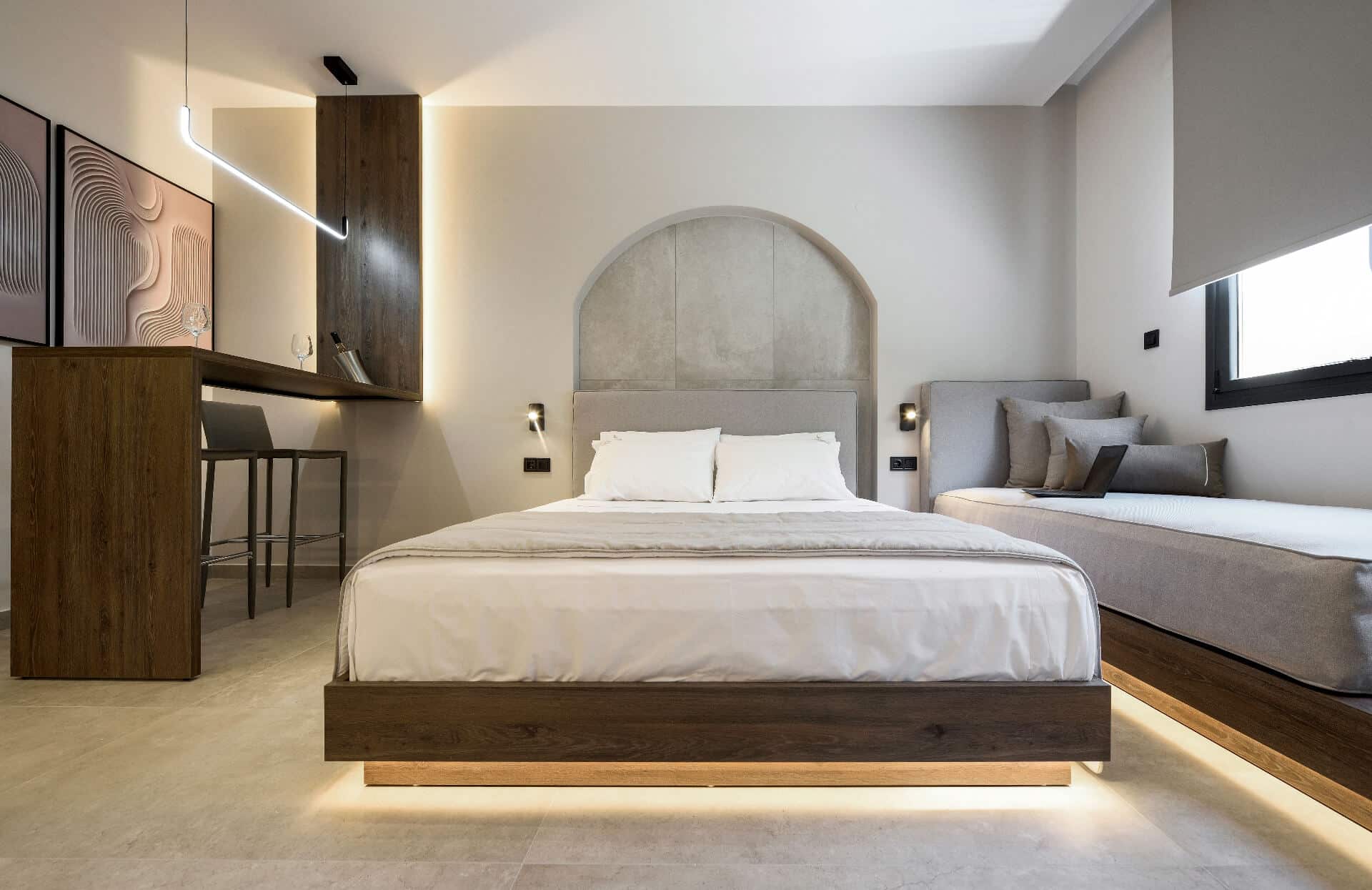
Weather shapes a Thessaloniki trip less when your base is in the middle of it. Loena Luxury Suites sits in Ladadika at 13 Ernestou Emprar, where Tsimiski is 3 minutes away, the port and Modiano 8, Aristotelous 9, the White Tower 23. A sudden shower or a hot afternoon is a short walk home, and the day carries on. Each 30 m² suite has air conditioning for summer, a shared washing machine on the floor, a full kitchen, and fast Wi-Fi. Self check-in is from 15:00, check-out by 11:00. Weekend nights in the quarter are lively and audible.
Late April to mid-June and September to mid-October are the sweet spots, with warm, mostly dry days, comfortable evenings, and lighter crowds than high summer. July and August are hot, often 30 to 34°C, and best for the waterfront and late nights. Winter is mild but the wettest, greyest part of the year. Whenever you come, the flat central core stays easy to explore on foot.
Does it snow in Thessaloniki?
Rarely in the centre. Winters are mild for the latitude, usually around 2 to 12°C by day, and most cold-season precipitation falls as rain. Snow does dust the surrounding hills, but settling snow in the flat city centre is uncommon and tends to melt within a day. A warm, wind-resistant coat and water-resistant shoes are enough for a winter visit.
What is the Vardaris wind?
The Vardaris is Thessaloniki's characteristic north wind, funnelled down the Axios (Vardar) river valley. It clears the sky and sharpens the light over the gulf, but it also drops the perceived temperature, so clear winter days can feel several degrees colder than the forecast. A wind-resistant layer is more useful here than heavy padding in any cool season.
What should I pack for Thessaloniki?
Pack by season. In summer, light breathable clothing, a hat and sunglasses, plus sunscreen and water. In spring and autumn, layers you can add and shed, comfortable shoes for the cobbles, and a light jacket or small umbrella. In winter, a warm, wind-resistant coat, a scarf, and water-resistant closed shoes. Comfortable walking shoes are worth it in every season, since the central sights are best seen on foot.