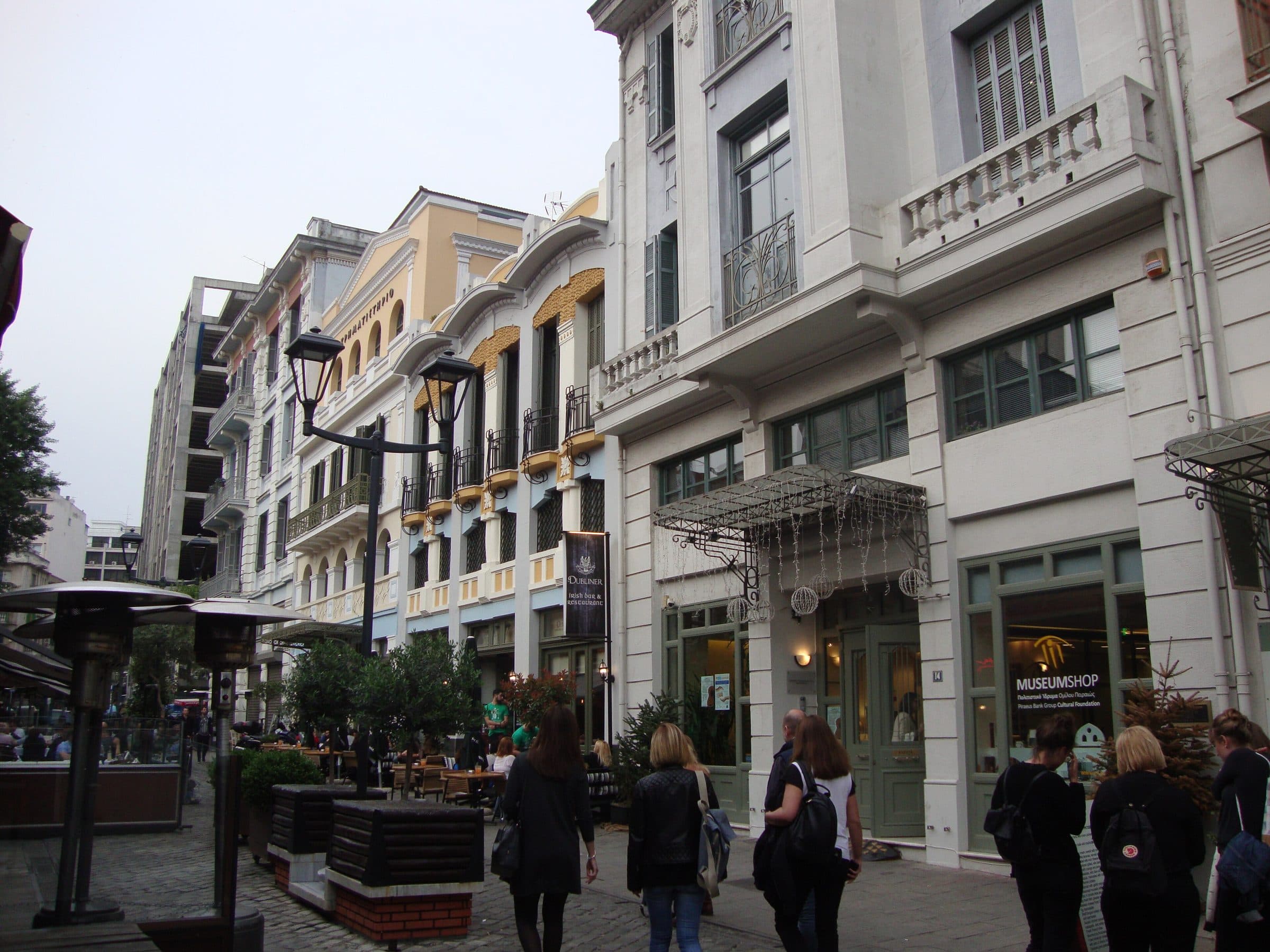
Museum of Byzantine Culture
Nea Paralia, 32 min walk
The museum of Byzantine Thessaloniki, in Kyriakos Krokos's building behind Nea Paralia.
European Museum of the Year 2005
The White Tower
Nea Paralia, 23 min walk
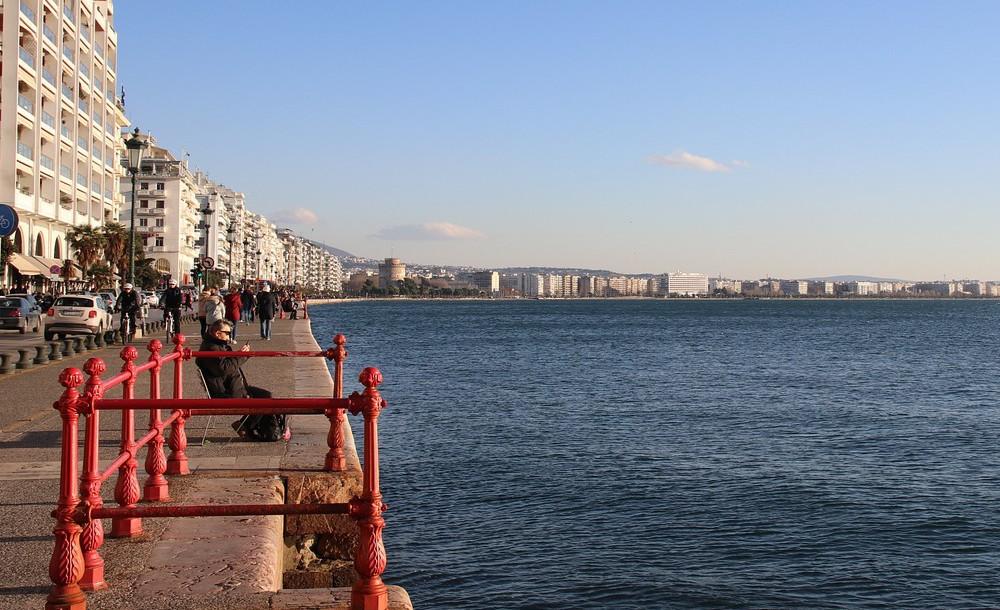
The city's landmark and history museum, at the start of the Nea Paralia waterfront.
Museum and city panorama
The Rotunda
Roman & Byzantine city, 21 min walk
4th-century Roman rotunda: later a church and mosque: with early-Christian mosaics. UNESCO.
4th century, UNESCO, the city's only surviving minaret
The Arch of Galerius
Roman & Byzantine city, 20 min walk
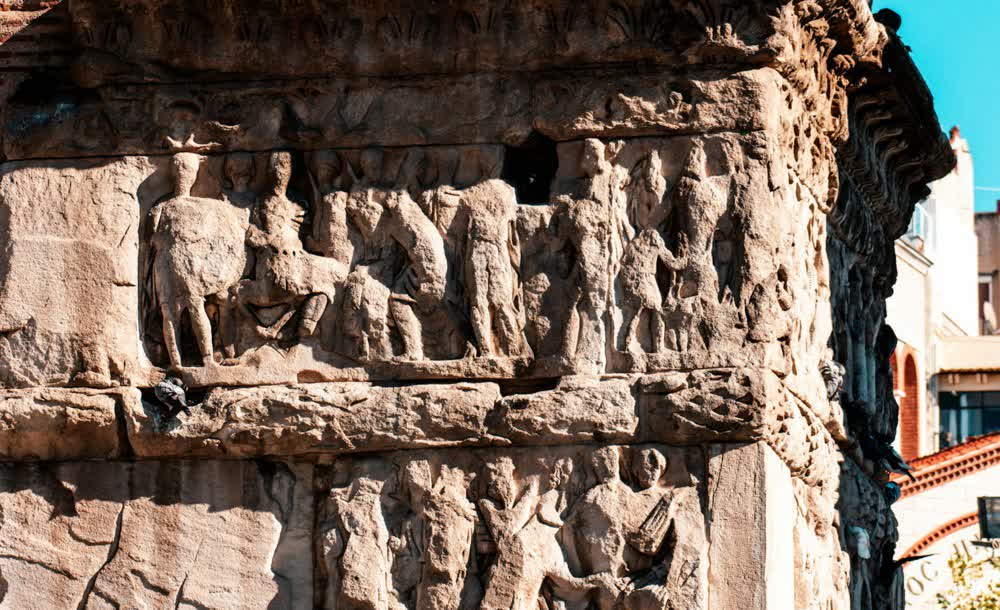
Galerius's Roman triumphal arch ("Kamara"): the city's meeting-point landmark, on the ancient Roman axis. UNESCO.
UNESCO, Roman axis, Galerius campaign reliefs
Agios Dimitrios
Roman & Byzantine city, 16 min walk, uphill
The basilica of the city's patron saint with its martyrdom crypt: UNESCO Early Christian and Byzantine monuments.
UNESCO, 5th century, martyrdom crypt
Hagia Sophia
Roman & Byzantine city, 14 min walk
Seventh-century Byzantine church with ninth-century dome mosaics: one of the city's 15 UNESCO monuments.
UNESCO, 7th century, dome mosaics
The Roman Forum
Roman & Byzantine city, 11 min walk
The ancient agora and odeon, above the modern centre: freely visible from street level, restored odeon hosts summer shows.
Ancient agora, odeon, underground museum
Heptapyrgion and the walls
Ano Poli, 35 min walk, uphill
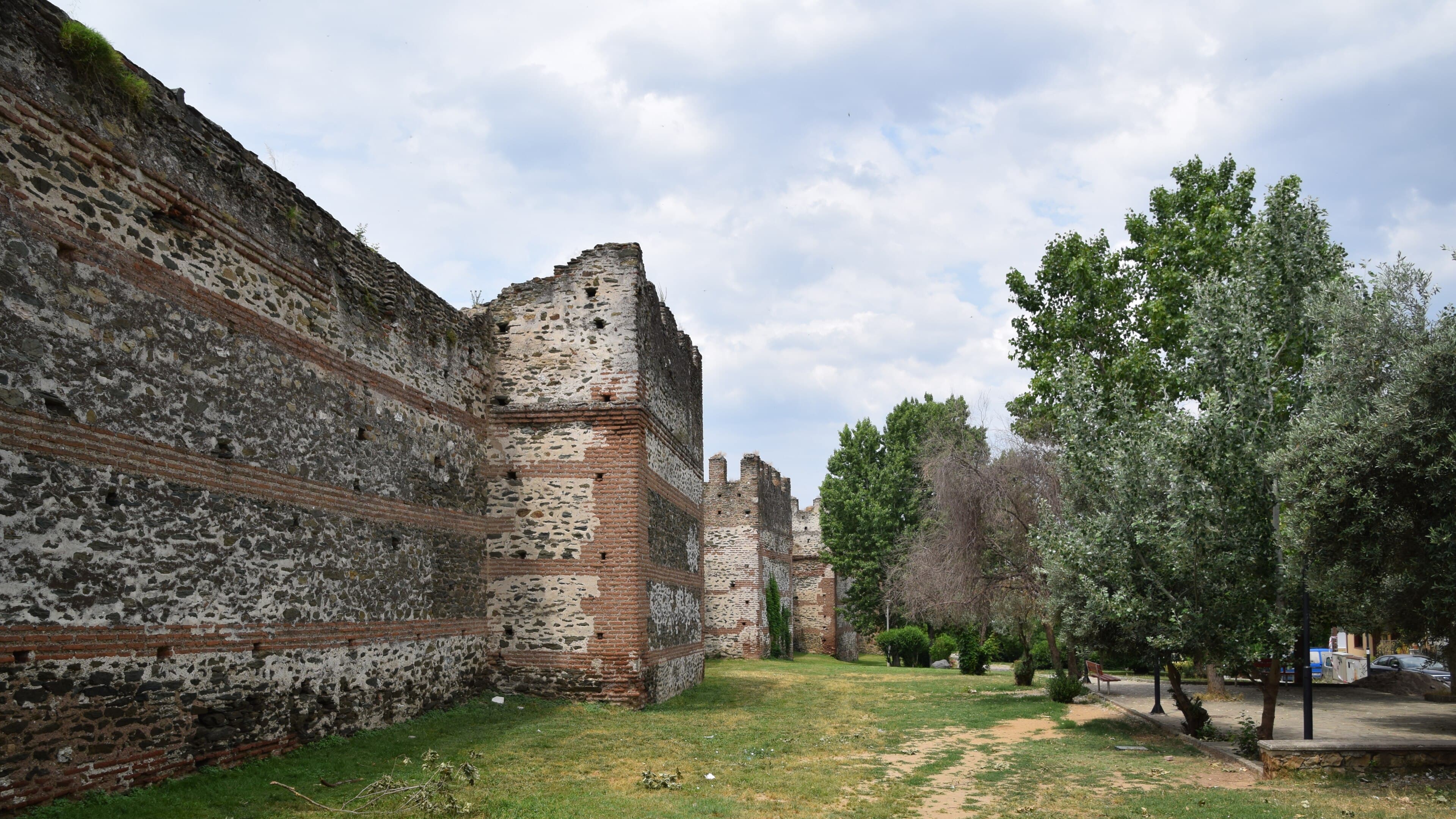
The Byzantine city walls and the Yedi Kule fortress: the city's best view from the Trigonion Tower, open 24/7 and free.
Byzantine walls, Trigonion Tower, free panorama
Zongolopoulos's Umbrellas
Nea Paralia, 31 min walk
Zongolopoulos's monumental stainless-steel "Umbrellas" sculpture on Nea Paralia: restored and re-lit in May 2026, the seafront's most photographed landmark.
G. Zongolopoulos, restored with new lighting 2025-26
Thessaloniki Concert Hall
Nea Paralia, 18 min walk, by taxi
The city's concert hall at the far end of Nea Paralia, 25is Martiou and the seafront: the 1,400-seat M1 building and Arata Isozaki's M2.
Inaugurated 2 January 2000, a 1,400-seat hall
The Royal Theatre
Nea Paralia, 23 min walk
The National Theatre of Northern Greece's stage on Plateia Lefkou Pyrgou, a 1940 building by Konstantinos Doxiadis: 683 seats and a café facing the tower.
1940 building, 683 seats, rebuilt 2000
Alexander the Great Monument
Nea Paralia, 27 min walk
Evangelos Moustakas's mounted Alexander, standing since 1974 at the start of Nea Paralia: 6.15 m of bronze, with shields, sarissas and a relief of the battle of Issus.
Evangelos Moustakas, 1974, 6.15 m of bronze
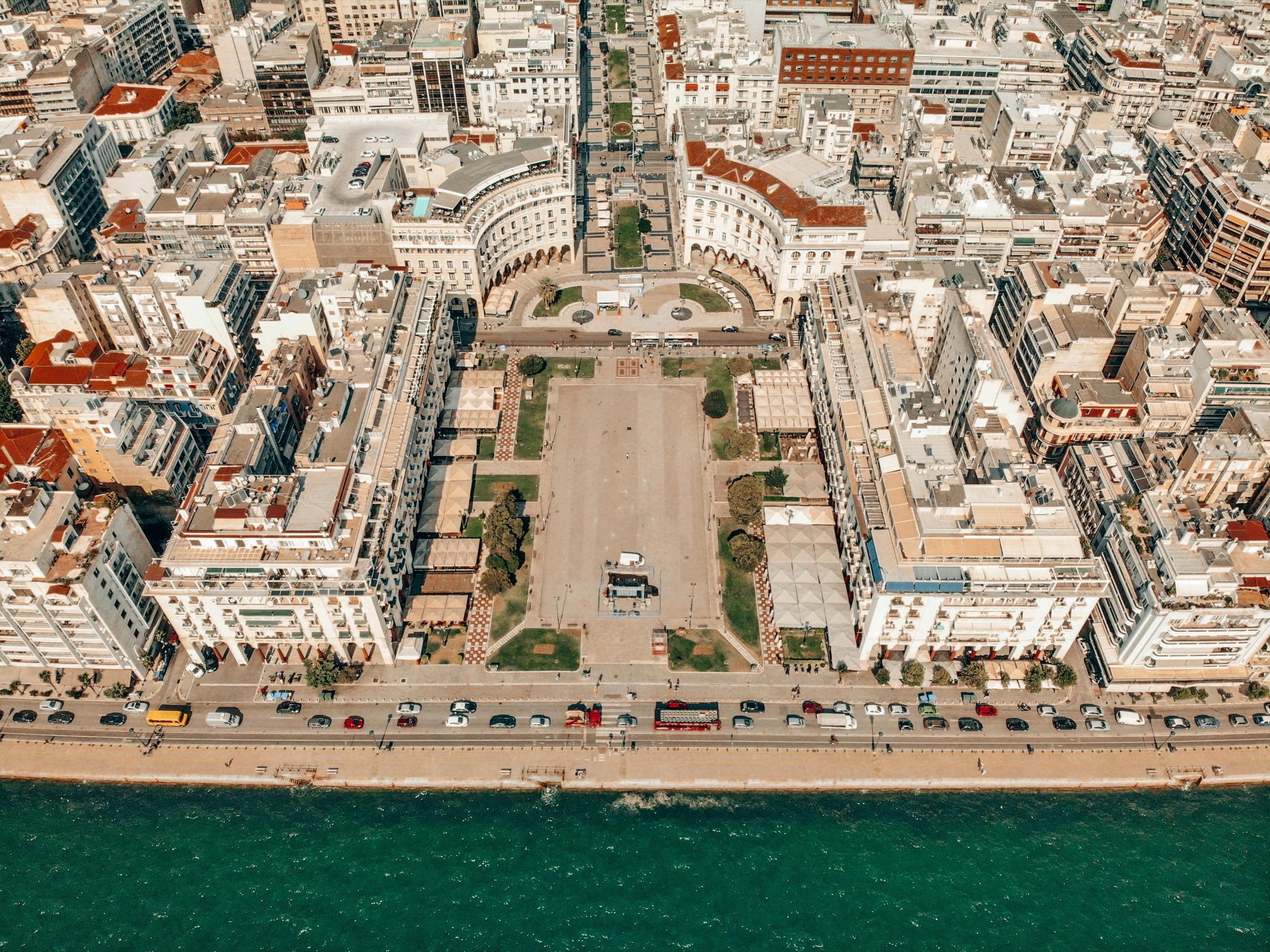
Nea Paralia Gardens
Nea Paralia, 27 min walk
The gardens strung along the promenade: of Alexander, of Sand, of the Seasons, of Water, of the Afternoon Sun with the Umbrellas. Playgrounds, courts and an open-air amphitheatre.
A 3.5 km redevelopment, amphitheatre in the Garden of the Seasons
Vlatadon Monastery
Ano Poli, 31 min walk, uphill
The one Byzantine monastery in the city still working, just outside the Acropolis walls at Eptapyrgiou 64. Its courtyard looks out over the whole city to the gulf.
UNESCO, founded 1351-1371, seat of the Patriarchal Institute of Patristic Studies since 1968
Agios Nikolaos Orphanos
Ano Poli, 32 min walk, uphill
A small early-fourteenth-century church in a walled yard on Irodotou by the eastern walls, holding the fullest set of wall paintings left in Thessaloniki. It opens for a few hours, and not every day.
UNESCO, wall paintings of 1310-1320, free entry
Osios David
Ano Poli, 29 min walk, uphill
The katholikon of the Latomou monastery, late fifth century, at the end of a dead-end street at Epimenidou 17. The Ezekiel-vision mosaic sits in the apse of the sanctuary.
UNESCO, the Ezekiel vision mosaic, free entry
Profitis Ilias
Ano Poli, 24 min walk, uphill
A Byzantine church on a rock outcrop at Olympiados 53, the only one in Thessaloniki built to the Athonite plan. It is the first monument you meet on the way up.
UNESCO, Athonite plan, free entry
The Byzantine bath
Ano Poli, 28 min walk, uphill
The one public Byzantine bath left in the city, on the block between Theotokopoulou and Krispou: antechamber, warm room, hot room and cistern, all in place. It opens for a few hours a week.
UNESCO, the one secular building on the list, in use as a bath until 1940